
Acute Injury & Pain
A sudden injury can be unsettling. Whether you’ve sprained an ankle, strained a muscle, irritated a tendon or simply moved in a way your body wasn’t expecting, pain can make you cautious about what to do next. The good news is that pain following an acute injury is often part of the body’s natural protective response — it encourages you to slow down, protect the injured area and give the tissues time to recover.
My role is to help you understand what has happened, guide the healing process and gradually restore your confidence in movement, so that you can get back to the things that matter to you.

Acute pain is usually short-term, and it settles as healing takes place
Acute pain is often associated with a recent injury or change in the tissues. Following an injury the nervous system can become more sensitive, which means movements that would normally feel comfortable may temporarily become painful. Although frustrating, that increased sensitivity has a useful protective role in the early stages of healing.
As the tissues recover and you begin to move and load them appropriately, this sensitivity usually reduces.
Pain is not always a sign that you are causing further damage.
Understanding this can help you feel more confident about gradually returning to movement.
How acute pain usually behaves

Sensitivity rises with the injury, then settles as the tissues heal and you gradually reintroduce movement and load.
I want to understand more than simply where it hurts
I want to understand what happened, how your symptoms have changed and how the injury is affecting your life. Most importantly, I want to understand what you want to get back to. Together we will explore:
The activities you are currently missing
What you most want to return to
How your symptoms are affecting sleep, work and everyday life
What you have already tried
What matters most to you
What you hope to achieve from physiotherapy
This gives us a much clearer picture of both the injury and the person experiencing it.
The next step is to understand the injury properly
I will assess your movement, strength, joint mobility and the tissues involved to build a picture of what has happened and how significant the injury is. I will also look beyond the immediate injury to identify factors that may have contributed to it.
The injury itself
Movement, strength, joint mobility and the tissues involved — how significant the injury is and what stage of healing you are at.
What may have contributed
Perhaps a weakness, a restriction in movement, an altered movement pattern, or a change in how you have been loading your body.
What is appropriate now
What to protect, what you can safely move, what to avoid temporarily, and how to progress from here.
Understanding the whole picture allows us to make better decisions about your recovery
From there, I can advise you on what is appropriate at each stage: what to protect, what you can safely move, what to avoid temporarily and how to progress.
Your treatment will be tailored to your injury, your body and your goals
Depending on what we find, this may include hands-on treatment, targeted movement and progressive loading, and practical advice on managing the injury day to day.
Hands-on treatment
Soft-tissue techniques, joint mobilisation, myofascial techniques or taping where appropriate, to help restore movement and reduce symptoms.
Rather than treating the painful area in isolation, hands-on treatment works alongside movement and rehabilitation.
Targeted movement and exercise
As the injury settles, appropriate movement and progressive loading become an important part of recovery.
We may work on strength, mobility, balance or movement patterns to restore the capacity of the injured tissues and the structures around them.
Advice and self-management
Knowing what to do — and what not to do — after an injury can be just as important as treatment.
I will help you understand how to modify your activities, how much you can safely do and how to reintroduce movement and load.
The aim isn't simply to make you feel better today — it is to help you become stronger and more confident in the activities you want to return to.
How much to rest, what is safe, and when to start moving again
In the early stages of an injury these questions are difficult to answer on your own. I will guide you through this stage, helping you understand what your body needs and how to gradually reintroduce movement and load without unnecessarily delaying your recovery.
The aim is not simply to protect an injury until it feels better, but to help your body progressively regain movement, strength and confidence.
Protect
Settle the irritated tissues without shutting movement down completely.
Restore movement
Reintroduce comfortable range early, at a pace your body accepts.
Build load
Progressively rebuild strength and tolerance in the injured area.
Return with confidence
Prepare for the specific demands of the activity you want back.
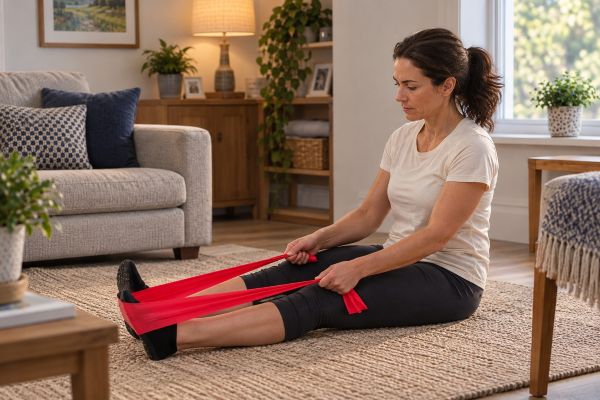

Recovery is not simply about reducing pain
It is about restoring the movement, strength and confidence you need to return to your everyday life.
Walking comfortably again
Sleeping well
Returning to work
Getting back to exercise
Playing sport again
Or simply trusting your body again
Together, we will build a recovery plan that makes sense for you and your life.
If you've recently been injured
You don’t have to work out what to do on your own. A thorough assessment can help you understand your injury, what you can safely do now and how to move forward with confidence.
If your pain has been with you for months rather than days, you may find it helpful to read about persistent (chronic) pain instead.
Book an assessment
Knowing what to do next can make all the difference. Let’s start with what happened.